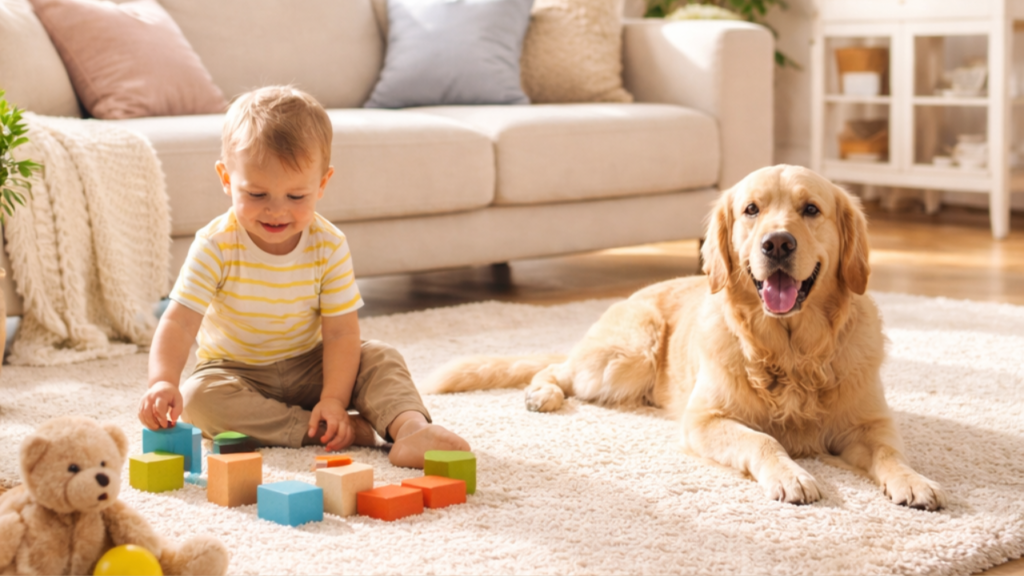
A home filled with kids and pets is full of life, energy, and love. It’s also full of fingerprints, crumbs, pet hair, spills, and hidden germs.
While regular cleaning keeps your home looking tidy, households with children and animals require a more intentional routine to maintain a truly healthy environment. The key is not just cleaning often — but cleaning smart.
Here’s a practical guide to how often you should clean when kids or pets are part of your everyday life.
Daily Cleaning: High-Touch & High-Traffic Areas
In busy households, certain areas accumulate dirt and bacteria quickly.
Daily focus areas should include:
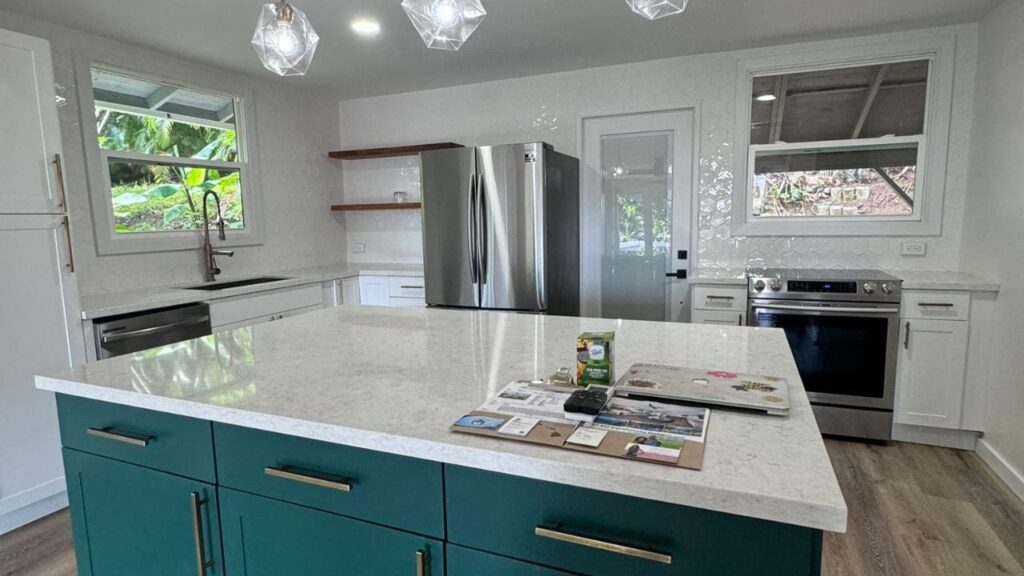
- Kitchen countertops and dining tables
- High chairs and feeding areas
- Frequently touched surfaces (light switches, door handles)
- Quick vacuuming or sweeping of high-traffic floors
- Spot cleaning visible spills or pet accidents
Children frequently touch surfaces and then their faces. Pets track in dirt from outdoors. A quick daily reset prevents buildup and keeps germs under control.
Weekly Cleaning: Surface Maintenance
Weekly cleaning should go beyond basic tidying and address areas that collect hidden debris.
Recommended weekly tasks:
- Vacuum carpets and rugs thoroughly
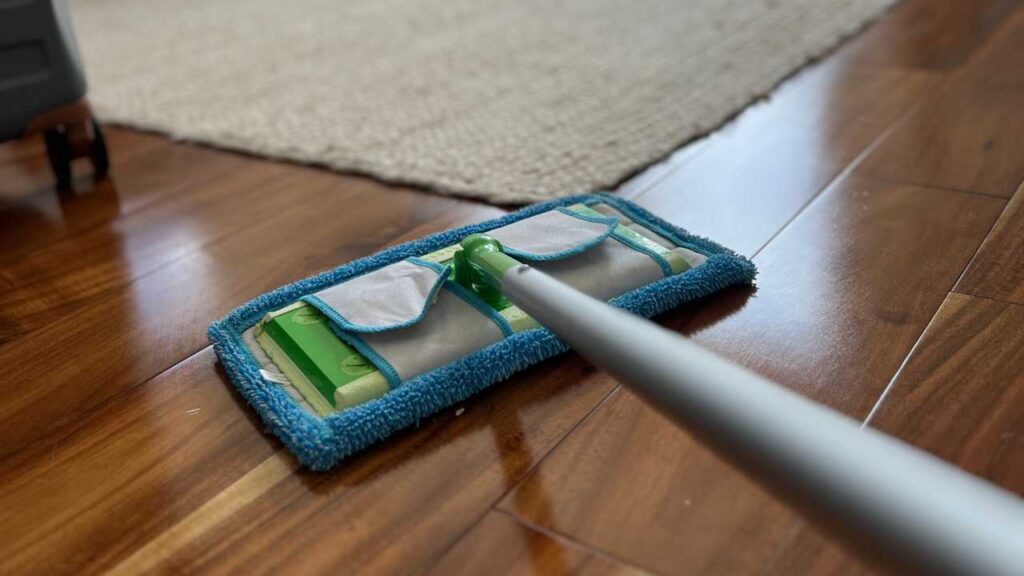
- Mop hard floors
- Clean bathrooms and disinfect sinks
- Wash pet bedding
- Wipe baseboards in main areas
- Dust furniture and reachable surfaces
This routine prevents allergens, pet dander, and dust from accumulating at unhealthy levels.
Monthly Cleaning: Deeper Surface Care
Once a month, it’s important to address less obvious areas where grime builds up over time.
Monthly priorities:
- Clean behind and under furniture
- Wipe walls with visible marks or handprints
- Deep clean kitchen appliances (microwave, oven surface)
- Wash throw blankets and decorative pillows
- Clean air vents and replace HVAC filters if needed
These steps improve air quality and extend the life of your home’s materials.
Deep Cleaning: Every 3–4 Months
For households with kids or pets, a professional deep cleaning every 3 to 4 months is highly recommended.
Deep cleaning targets:
- Embedded pet hair in carpets and upholstery
- Built-up grime in bathrooms and kitchens
- Hidden dust in corners and baseboards
- Odor sources trapped in fabrics
- Areas that regular cleaning often misses
Think of deep cleaning as a reset for your home. It restores hygiene levels, improves indoor air quality, and prevents long-term wear and damage.
When You Should Schedule a Deep Cleaning Sooner
In some situations, you shouldn’t wait:
- After illness in the household
- If allergies are worsening
- When pet odors persist
- Before hosting guests or family events
- After adopting a new pet
These are signs your home needs more than routine maintenance.
Why Frequency Matters
Children spend more time on floors. Pets shed continuously. Crumbs and organic debris create ideal conditions for bacteria and allergens to thrive.
Without consistent cleaning:
- Indoor air quality declines
- Allergens increase
- Surfaces deteriorate faster
- Odors become harder to eliminate
Cleaning isn’t just about appearance — it’s about prevention, protection, and health.
The Bottom Line
If you have kids or pets, cleaning should be proactive — not reactive.
Daily upkeep keeps things manageable.
Weekly maintenance controls buildup.
Quarterly deep cleaning protects your home and your family.
A clean home isn’t about perfection. It’s about creating a safe, healthy space where your family can thrive.